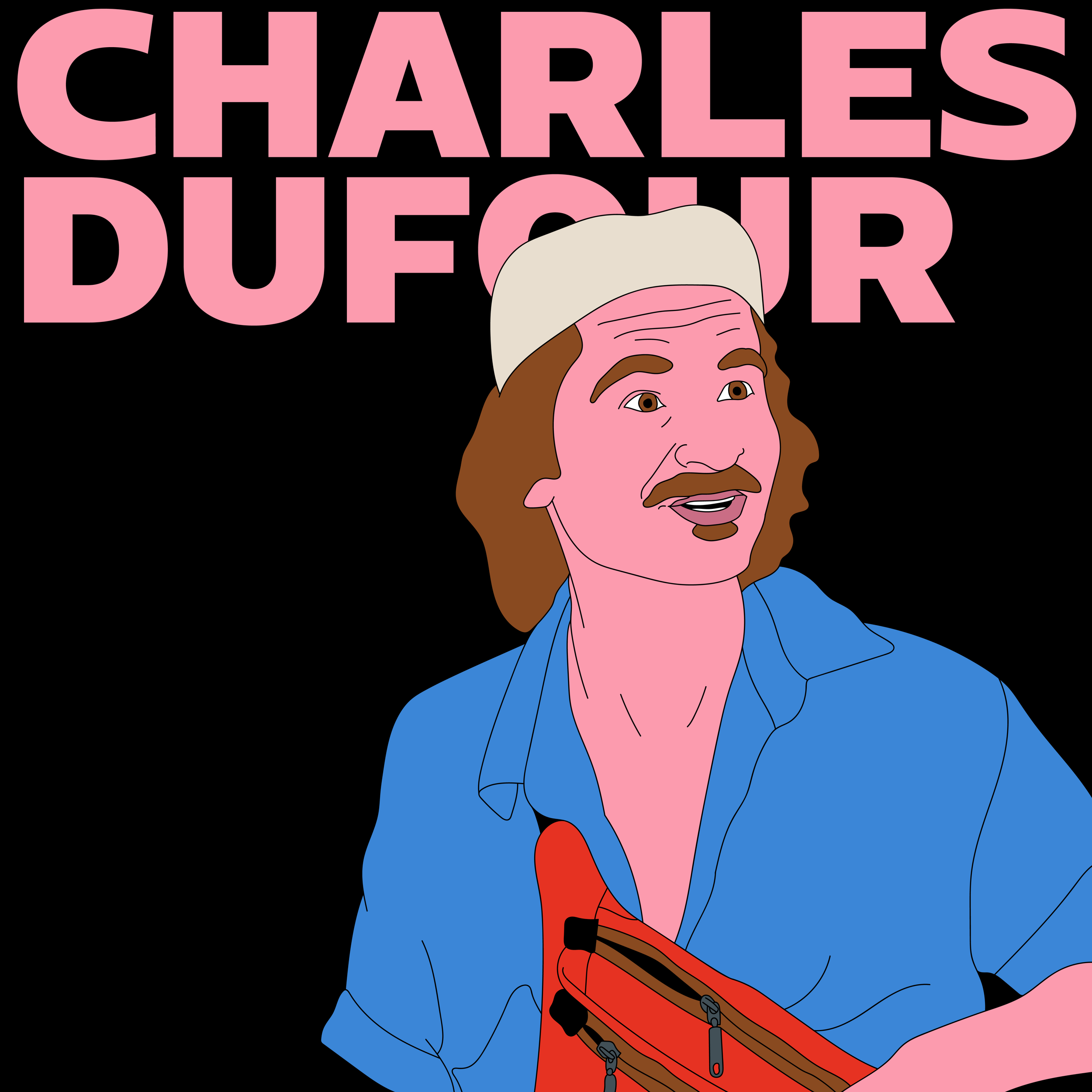
CHARLES DUFOUR
PAST WINES
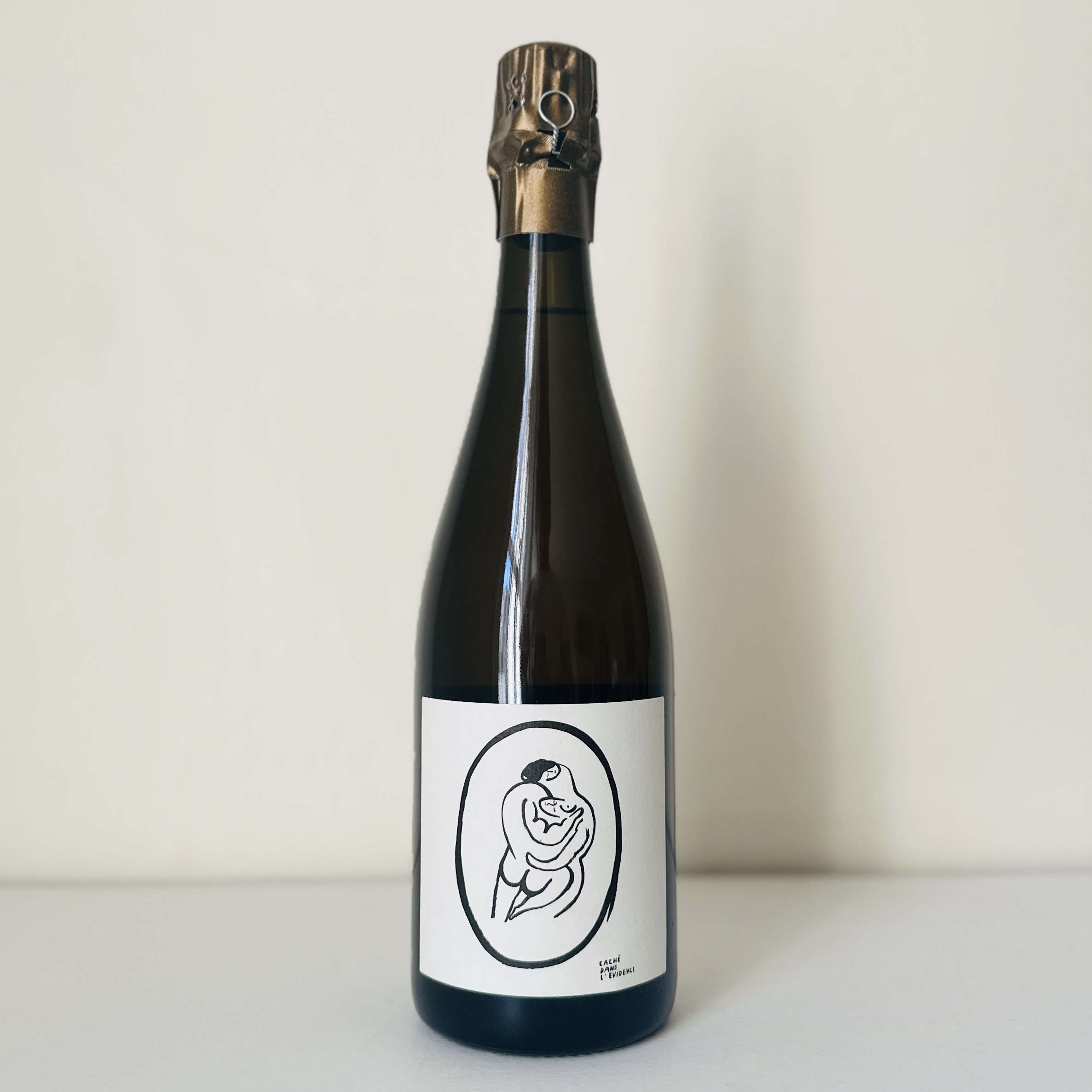
#12 CACHE DANS L’EVIDENCE
This wine comes from Charles Dufour’s organic vineyard in Landreville, a village in Champagne’s southern Côte des Bar. Classic kimmeridgian chalk soils mingle with heavier clay marls leading to an intermingling of poise and power. This release is a blend of Pinot Noir (60%), Chardonnay (30%), and Pinot Blanc (10%). 80% of the wine comes from the 2021 vintage, 20% comes from vintages as far back as the 1980s now that Charles has disgorged his father’s cellar into his reserve perpetuelle – an ode to the past. He ferments three quarters of his wines in barrel while the remainder ferments in stainless steel. Both primary fermentation and malolactic conversion are done with indigenous microorganisms. After bottling, the wine spends 15 months on lees during secondary fermentation. It was disgorged in January 2024 and sees an extra-brut dosage (<3g/l). No additional SO2 was added. 12% ABV
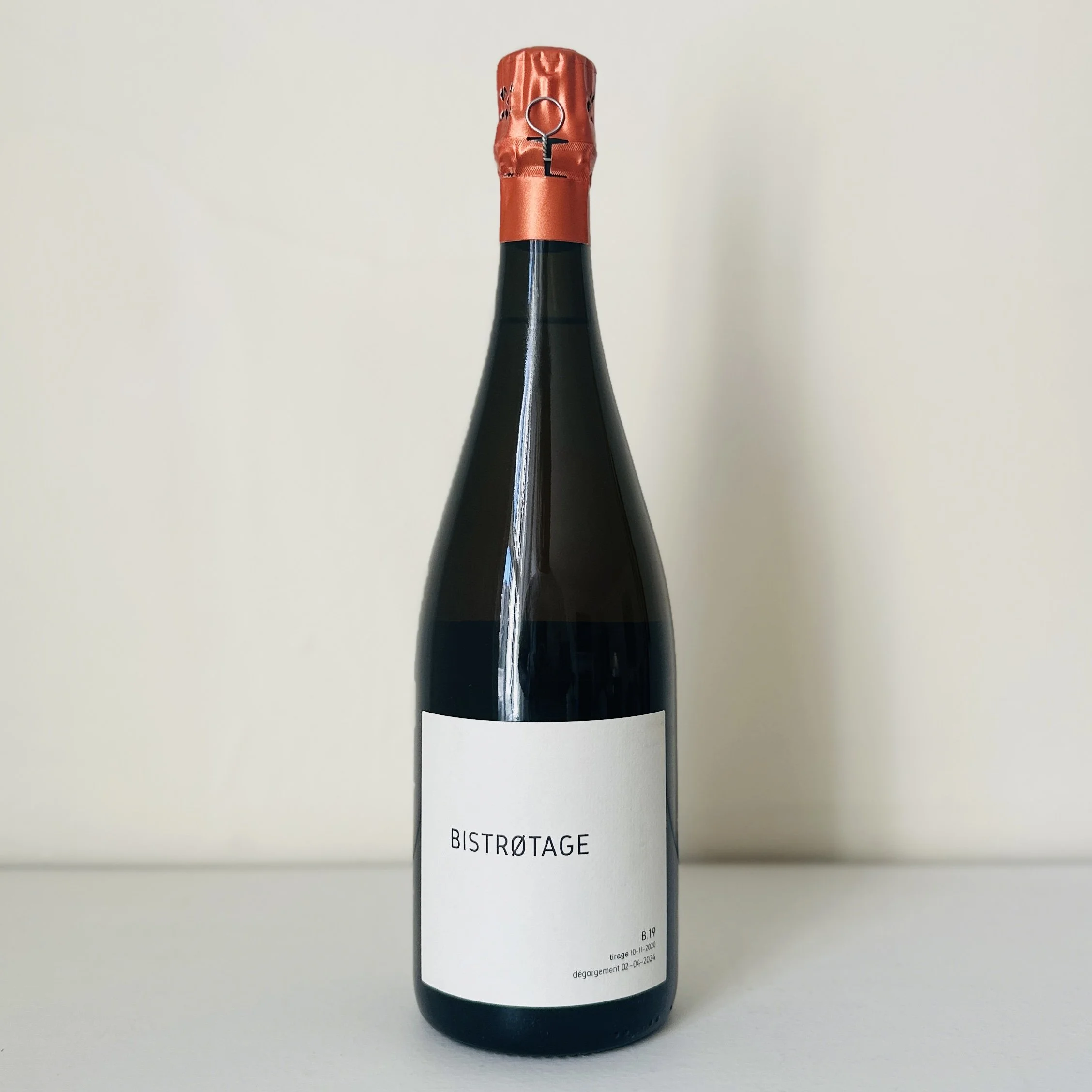
BISTROTAGE B19
The grapes for this project come from Charles’ Mother in the Vallée d’Arce. Three lieu-dits on calcareous clay are used: Bicheret, Les Copies, and Val Herard. Pinot Noir is direct pressed into barrel for fermentation. It is primarily from the 2019 harvest, but a small amount of reserve wine is also added. The liqueur de tirage is made from organic cane sugar and yeasts isolated from the vineyard. It spends over four years on lees before disgorging and the addition of a minimally sweet dosage (2g/L).
2004 THE BALLAD OF THE VILLAGES
This wine is an incredibly touching ode to Charles’ father. It was made during their first vintage working together and disgorged the year of his death, seventeen years sur-lattes. Pinot Noir from Landreville, Chervey, and Neuville sur Seine makes up the lion’s share, while Pinot Blanc from Celles sur Ources makes up the remainder. It was released without dosage.
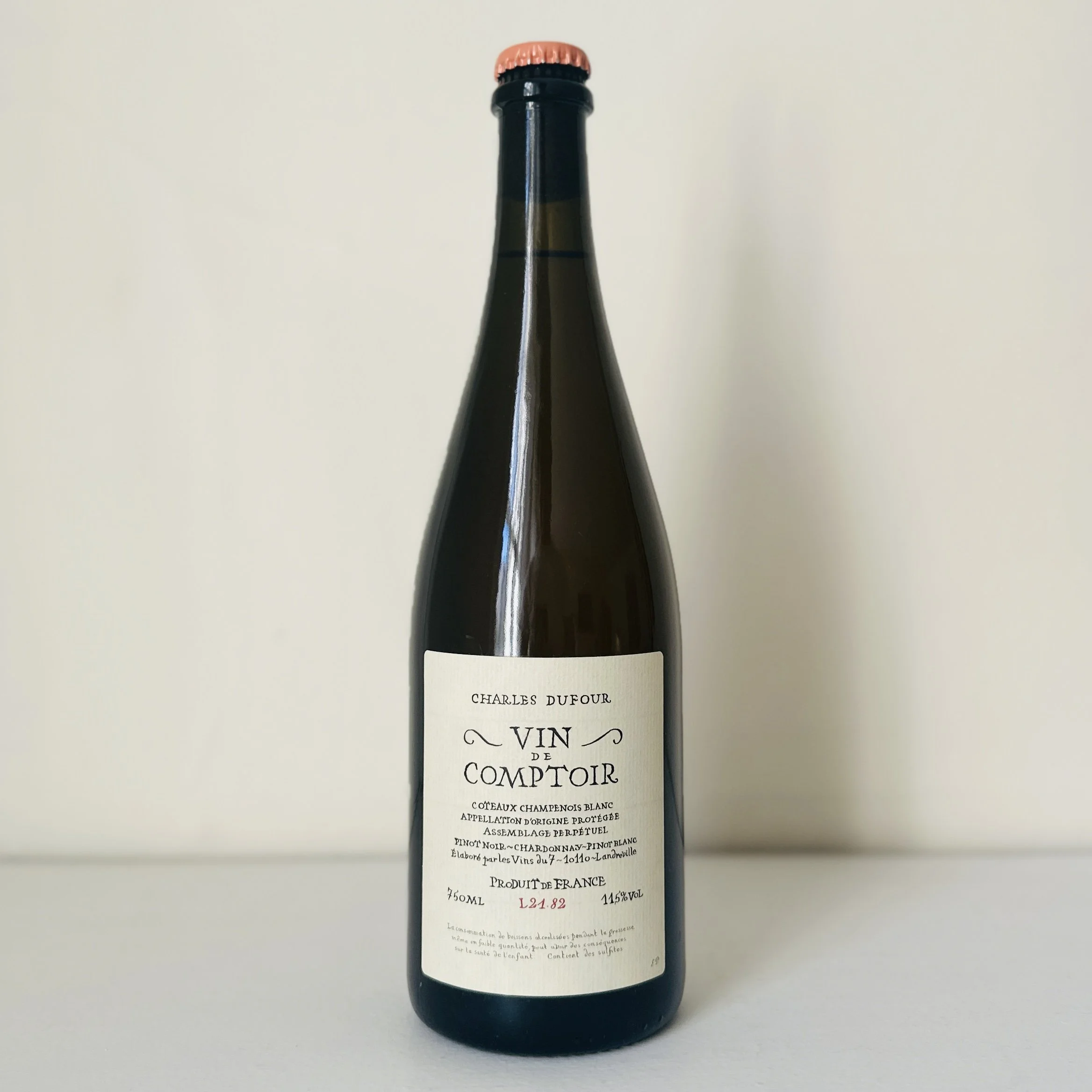
VIN DE COMPTOIR (COTEAUX CHAMPENOIS) 21.82
This Coteaux Champenois is made from Pinot Noir, Chardonnay, and Pinot Blanc from Charles’ vineyards in Ource. The grapes were whole-cluster pressed into neutral barrel for primary fermentation and malolactic conversion. After élevage, the wine (from the 2021 vintage) is blended with his reserve perpetuelle which has been going for nearly a decade. It was bottled in October of 2022 without fining, filtration, or SO2.
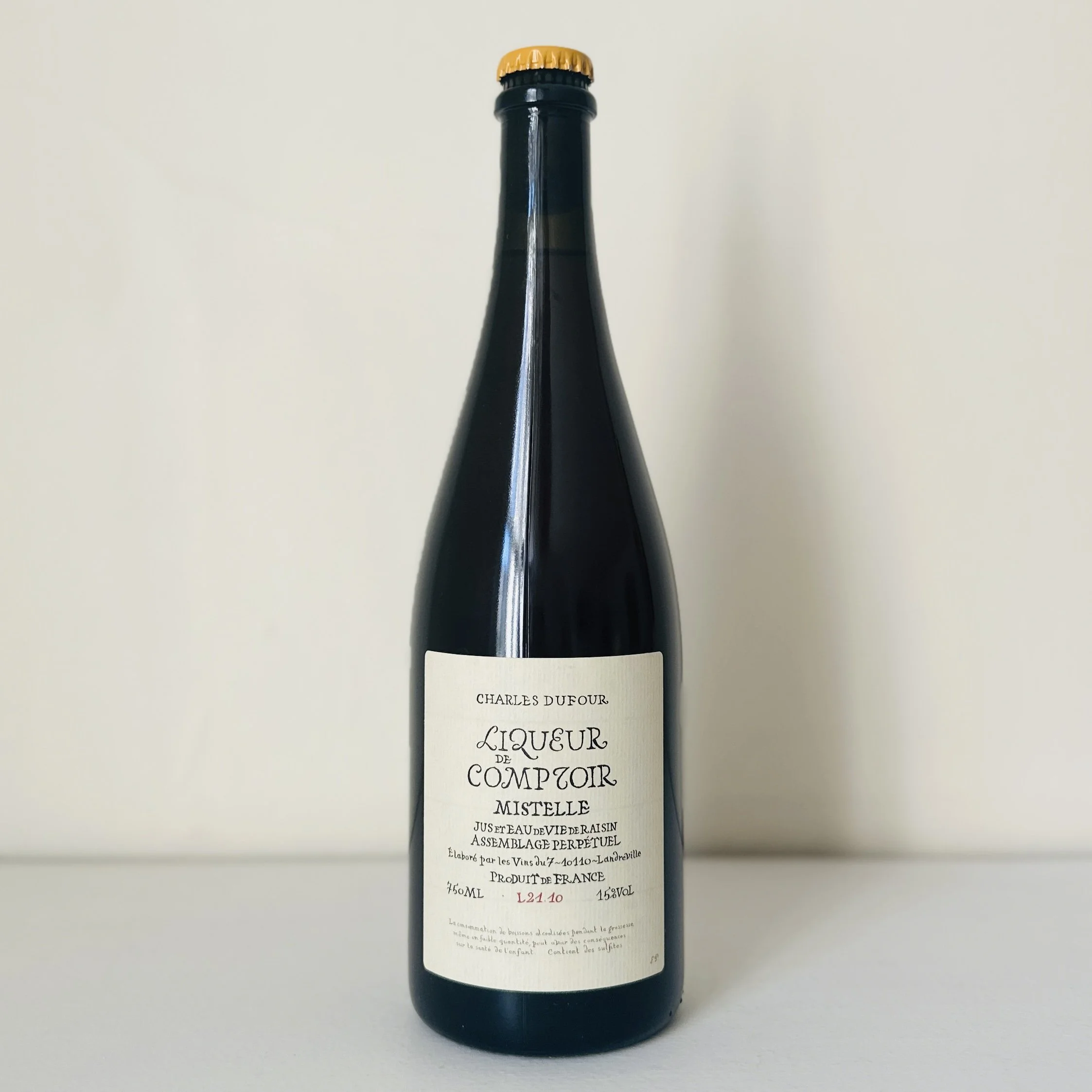
LIQUEUR DE COMPTOIR 21.10
This is Charles’ take on Ratafia, a Mistelle traditional in Champagne. The spirit is a 60% ABV barrel aged distillate made from his wine in 2010. Juice from fresh pressed grapes are mixed with the spirit until the concoction is 17% ABV. This is then aged in a solera until Charles is ready to bottle, unfined, unfiltered, and without SO2.

#11 TERRINE ET JARDIN
This wine comes from Charles Dufour’s organic vineyard in Landreville, a village in Champagne’s southern Côte des Bar. Classic kimmeridgian chalk soils mingle with heavier clay marls leading to an intermingling of poise and power. This release is a blend of Pinot Noir (60%), Chardonnay (30%), and Pinot Blanc (10%). 80% of the wine comes from the 2020 vintage, 20% comes from vintages as far back as the 1980s now that Charles has disgorged his father’s cellar into his reserve perpetuelle – an ode to the past. He ferments three quarters of his wines in barrel while the remainder ferments in stainless steel. Both primary fermentation and malolactic conversion are done with indigenous microorganisms. After bottling, the wine spends 15 months on lees during secondary fermentation. It was disgorged in January 2023 and sees an extra-brut dosage (<3g/l). No additional SO2 was added. 12% ABV
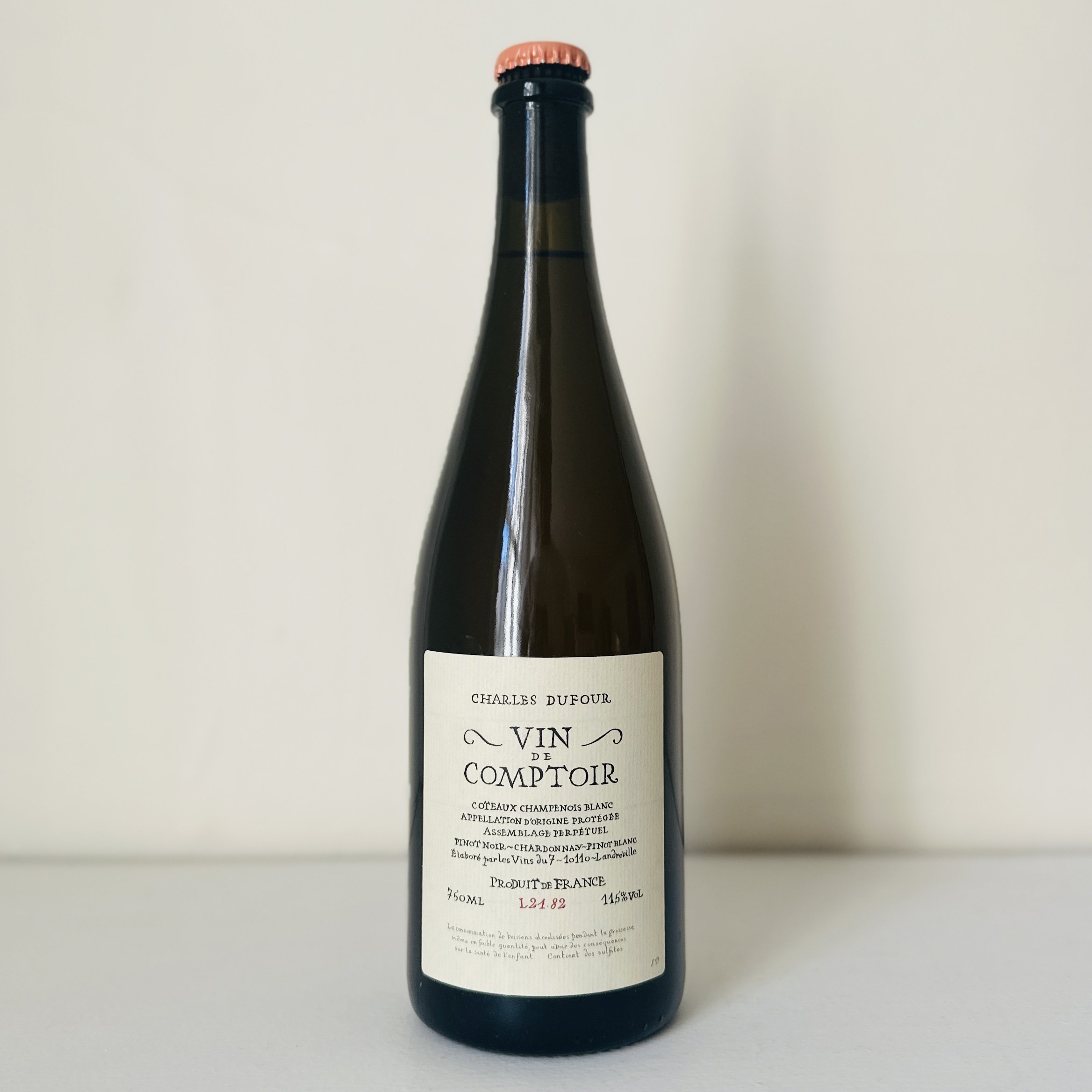
VIN DE COMPTOIR 19.10
This Coteaux Champenois is made from Pinot Noir, Chardonnay, and Pinot Blanc from Charles’ vineyards in Ource. The grapes were whole-cluster pressed into neutral barrel for primary fermentation and malolactic conversion. After élevage, the wine (from the 2019 vintage) is blended with his reserve perpetuelle which has been going for nearly a decade. It was bottled in October of 2020 without fining, filtration, or SO2.
#10 TCHIN TCHIN
This wine comes from Charles Dufour’s organic vineyard in Landreville, a village in Champagne’s southern Côte des Bar. Classic kimmeridgian chalk soils mingle with heavier clay marls leading to an intermingling of poise and power. This release is a blend of Pinot Noir (60%), Chardonnay (30%), and Pinot Blanc (10%). 80% of the wine comes from the 2019 vintage, 20% comes from vintages as far back as the 1980s now that Charles has disgorged his father’s cellar into his reserve perpetuelle – an ode to the past. He ferments three quarters of his wines in barrel while the remainder ferments in stainless steel. Both primary fermentation and malolactic conversion are done with indigenous microorganisms. After bottling, the wine spends 15 months on lees during secondary fermentation. It was disgorged in January 2022 and sees an extra-brut dosage (<3g/l). No additional SO2 was added. 12% ABV

#9 TRADITION
This wine comes from Charles Dufour’s organic vineyard in Landreville, a village in Champagne’s southern Côte des Bar. Classic kimmeridgian chalk soils mingle with heavier clay marls leading to an intermingling of poise and power. This release is a blend of Pinot Noir (60%), Chardonnay (30%), and Pinot Blanc (10%). 80% of the wine comes from the 2018 vintage, 20% comes from vintages as far back as 2010. He ferments three quarters of his wines in barrel while the remainder ferments in stainless steel. Both primary fermentation and malolactic conversion are done with indigenous microorganisms. After bottling, the wine spends 15 months on lees during secondary fermentation. It was disgorged in January 2021 and sees an extra-brut dosage (<3g/l). No additional SO2 was added. 12% ABV

#8 STILLLEBEN
This wine comes from Charles Dufour’s organic vineyard in Landreville, a village in Champagne’s southern Côte des Bar. Classic kimmeridgian chalk soils mingle with heavier clay marls leading to an intermingling of poise and power. This release is a blend of Pinot Noir (60%), Chardonnay (30%), and Pinot Blanc (10%). 85% of the wine comes from the 2017 vintage, but 15% comes from vintages as far back as 2010. He ferments three quarters of his wines in barrel while the remainder ferments in stainless steel. Both primary fermentation and malolactic conversion are done with indigenous microorganisms. After bottling, the wine spends 15 months on lees during secondary fermentation. It was disgorged in January 2020 and sees an extra-brut dosage (<3g/l). No additional SO2 was added. 11.55% ABV, pH 3.13, 27ppm total SO2.